Iran, Uzbekistan chambers of commerce stress MOU implementation, private sector cooperation
TEHRAN- Vice President of the Iran Chamber of Commerce, referring to the challenges created at the international level for Iran’s economy, said: “The strength of Iran’s private sector is that it implements whatever seems impossible to implement.”
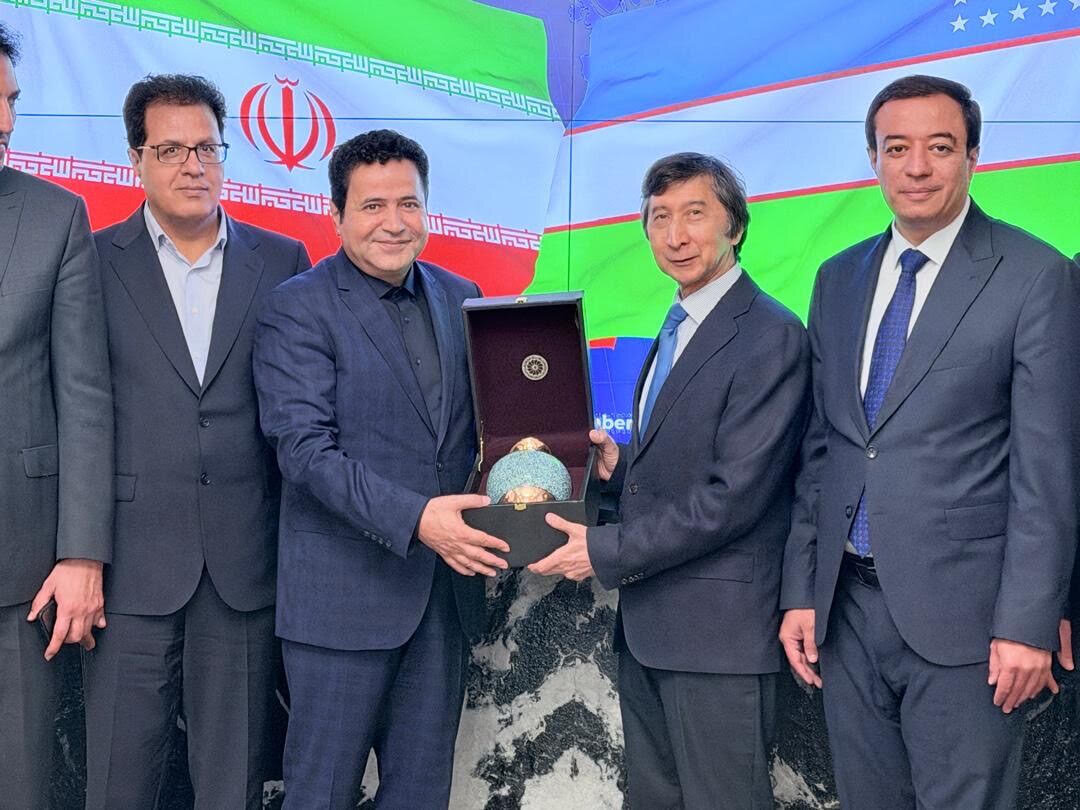
According to IRNA, citing the Iran Chamber of Commerce, Hossein Pir-Moazen, who traveled to Uzbekistan at the head of a trade delegation together with the Minister of Agriculture, met with the Deputy Chairman of the Uzbekistan Chamber.
Referring to the main purpose of these meetings, held during the Iranian trade delegation’s visit to Tashkent, he emphasized: “What matters is communication between the economic actors of the two sides and the implementation of the clauses of the memorandum of understanding signed between the chambers of Iran and Uzbekistan. We must work to raise the level of cooperation and provide the necessary infrastructure.”
He spoke about the importance of facilitation in the path of joint cooperation through follow-ups by the governments of Iran and Uzbekistan, and described monitoring this facilitation process as the mission of the two chambers in both countries.
Pir-Moazen also referred to the activity of the Iran-Uzbekistan Joint Chamber and stated: “If, based on the understanding between the two chambers, we can register companies in Uzbekistan and prepare the ground for cooperation, the level of exchanges between the two countries will increase significantly. In the meantime, the joint chamber can carry out the necessary follow-ups in cooperation with the international department of the Iran Chamber.”
The Vice President of the Iran Chamber referred to the strength and efforts of Iran’s private sector in all fields despite all international challenges and said: “Iran’s private sector brings to fruition whatever seems impossible through persistence, and its results are clearly visible in the agriculture and food industry. We are pursuing the implementation of the clauses of the memorandum of understanding between the two chambers of commerce of Iran and Uzbekistan.”
Then Alisher Sheikhov, Deputy Chairman of the Chamber of Commerce and Industry of Uzbekistan and a former minister in the fields of investment, trade, and industry, spoke at the meeting about the capacities of the two sides and the need to expand cooperation in line with these facilities.
He emphasized: “Uzbekistan welcomes the presence of Iranian companies wherever possible. Currently, given Iran’s major achievements in agriculture and the food industry, good progress has been made, and using the experience of Iranian companies is desired. Today, good cooperation has been formed between the two countries in the poultry sector.”
The Deputy Chairman of the Chamber of Commerce and Industry of Uzbekistan called for focusing on the implementation of the results of this meeting and, given the signing of the memorandum of understanding between the two chambers of Iran and Uzbekistan, said: “Based on the understanding reached, we have many duties and missions, and we must move toward greater mutual acquaintance between the companies of the two sides.”
He described increasing mutual understanding among the economic actors of the two countries as essential and proposed receiving information from Iran’s provinces and, in return, providing Uzbekistan’s information to the Iran Chamber.
Sheikhov considered the establishment of companies essential based on attention to the region’s transportation facilities and said: “It is important to examine in which region of Uzbekistan each company should be located based on the type of exports it has, so that it has easier access to its target market.”
Iran’s Minister of Agriculture, emphasizing the broad capacities of Iran and Uzbekistan for developing agricultural cooperation, said: The Islamic Republic of Iran is ready to share its experiences in food security, production, investment, technology transfer, and agricultural trade development with Uzbekistan.
Gholamreza Nouri Ghezeljeh, in a meeting with the Chairman of Uzbekistan’s Food Security Committee, expressed appreciation for the hospitality and solidarity with the government and people of that country, and added: Iran-Uzbekistan relations are deep and friendly, based on historical, civilizational, cultural, and religious commonalities, and the Islamic Republic of Iran is pleased with Uzbekistan’s progress and development.
The Minister of Agriculture, referring to the importance of establishing the Food Security Committee in Uzbekistan, stated: Food security is one of the most important strategic issues for countries, and the formation of such a body in Uzbekistan shows that country’s precise vision and proper planning in this field.
Explaining the experience of the Islamic Republic of Iran in ensuring food security under sanctions and crisis, he said: Although, in international laws and regulations, food and the basic needs of people are exempt from some restrictions and sanctions, in practice Iran’s food security has faced pressure and restrictions over the past years.
Nouri Ghezeljeh continued: Despite war, sanctions, and extensive restrictions, the food security system of the Islamic Republic of Iran has maintained its stability over the past year and a half and has been able to perform its duty in meeting the country’s needs well.
The Minister of Agriculture considered continuous attention to self-sufficiency and strengthening the foundations of domestic production to be among the important factors in the stability of the country’s food security and stated: Today, the self-sufficiency rate of Iran’s agricultural sector has reached about 85 percent, and the set of scientific, technical, and executive measures in recent years has increased the resilience of the country’s food system.
Emphasizing Iran’s readiness to transfer these experiences to friendly and neighboring countries, he said: Given the president’s emphasis, we are ready to share the experiences of the Islamic Republic of Iran with Uzbekistan and other Muslim countries and to cooperate to strengthen food security at the level of Islamic countries.
Nouri Ghezeljeh emphasized the development of agricultural trade between the two countries and added: Iran and Uzbekistan have significant capacities to increase the volume and value of agricultural product exchanges, and we can double agricultural trade between the two countries in the shortest time.
Welcoming the proposal to form a joint working group in the field of livestock and plant quarantine, he stated: Removing quarantine obstacles and facilitating processes related to veterinary and plant protection organizations can play an effective role in developing trade between the two countries.
The Minister of Agriculture noted: The deputy office for trade development with Uzbekistan and Iran’s veterinary and plant protection organizations will follow up on the formation of this joint working group and its operationalization as soon as possible.
Nouri Ghezeljeh proposed joint investment by Iran and Uzbekistan to establish and participate in the construction of a port terminal in one of Iran’s southern ports, including Chabahar or Bandar Abbas, and said: Completion of the North-South Corridor and Iran’s communication routes with Afghanistan can provide the ground for creating an effective corridor route to connect Uzbekistan to the Persian Gulf.
He added: Establishing a dedicated terminal can help develop Uzbekistan’s trade and facilitate that country’s access to open waters.
The Minister of Agriculture, referring to Iran’s geopolitical position and Uzbekistan’s place in Central Asia, said: The two countries can, by using the capacity of the North-South and East-West corridors and Iran’s access to open waters in the south and the Caspian Sea in the north, play an important role in developing trade and strengthening regional food security.
He announced the readiness of Iranian companies to participate in investment projects, establish processing and complementary industries, and transfer technology in Uzbekistan, and said: Iranian companies are ready to participate in developing Uzbekistan’s agricultural sector in the form of joint investment and the transfer of knowledge and technology.
Nouri Ghezeljeh, referring to the increase in trade volume between the two countries in recent years, stated: Despite the measures taken by officials and embassies of the two countries, the volume of exchanges is still not proportionate to the capacities and the will of the leaders of Iran and Uzbekistan, and more effort must be made to increase it.
Referring to the diverse capacities for production and trade of agricultural products in Iran, he said: There is no significant limitation for developing trade in agricultural products between the two countries, and Iran is ready to further expand the areas of cooperation and trade exchanges.
He invited the Chairman of Uzbekistan’s Food Security Committee to travel to Iran and added: The continuation of negotiations and the exchange of required documents can be pursued with the presence of the two countries’ parties in Tehran, and possible obstacles in the fields of quarantine, veterinary affairs, plant protection, and standards will be jointly examined and followed up.
The Minister of Agriculture also, among traders, businessmen, producers, and agricultural sector activists of Iran at the Embassy of the Islamic Republic of Iran in Tashkent, emphasizing the broad capacities of Iran and Uzbekistan for developing economic cooperation, said: Trade in agriculture should not be limited merely to export and import; rather, through technology transfer, joint production, and mutual investment, we should create more added value for both countries.
Nouri Ghezeljeh, appreciating the presence and efforts of the economic actors of the two countries, stated: Several contracts and cooperation memoranda are ready to be signed, and these documents can pave the way for the expansion of Iran-Uzbekistan economic and trade interactions.
He appreciated the efforts of the Embassy of the Islamic Republic of Iran in Tashkent to provide the ground for developing economic cooperation and said: The embassy’s activities in recent years in removing obstacles, increasing trade exchanges, and providing the basis for signing cooperation documents have been significant.
Nouri, referring to Uzbekistan’s position in Central Asia, considered this country one of the important and influential countries of the region and added: The capacity for cooperation with Uzbekistan is not limited only to that country’s domestic market, and its regional position can also strengthen the ground for Iran’s economic interaction with other Central Asian countries and the CIS area.
The Minister of Agriculture, referring to the good relations between Iran and Uzbekistan, stated: The mutual interest of the two countries must be turned into operational opportunities in trade and investment, and in this path, Iran is ready to cooperate in technology transfer, joint production, and licensed production in addition to exports.
He continued: The experience of Iran’s economic cooperation with some countries has shown that with the formation of direct communication between economic actors, there is capacity for a significant increase in exchanges, and in Uzbekistan’s case, existing capacities can lead to the development of agricultural trade.
Nouri also, emphasizing the importance of agricultural product exports, said: Export in this sector is not important only from the perspective of trade value and volume; it also plays an important role in regulating domestic production, supporting producers, and regulating the country’s market; therefore, even exports at small scales can have important economic effects.
Referring to the Ministry of Agriculture’s s policies for transparency and making trade competitive, he stated: In the past year, the number of actors in the field of importing basic goods increased by 36 percent, which indicates a move toward greater competition and transparency in trade.
The Minister of Agriculture also announced the facilitation of quarantine and trade processes and said: Quarantine processes in the field of veterinary affairs and plant protection are being shortened with the aim of facilitating trade, and the Ministry of Agriculture-Jihad considers itself obligated to remove unnecessary obstacles in the path of export and import.
Nouri, referring to the increase in production of some agricultural products, emphasized the necessity of special attention by economic actors to export opportunities and said: Increased production in products such as chicken, grapes, citrus fruits, and other horticultural products has created suitable capacity for export development, and this opportunity must be used to expand regional markets.
In conclusion, emphasizing the government’s support for economic actors, he noted: The Ministry of Agriculture will stand alongside the private sector in the path of trade development, transparency, competition, and facilitation of economic activities, and we hope that, by strengthening Iran-Uzbekistan cooperation, the ground will be provided for increased exchanges, joint investment, and the development of agricultural product exports.
MA
Leave a Comment